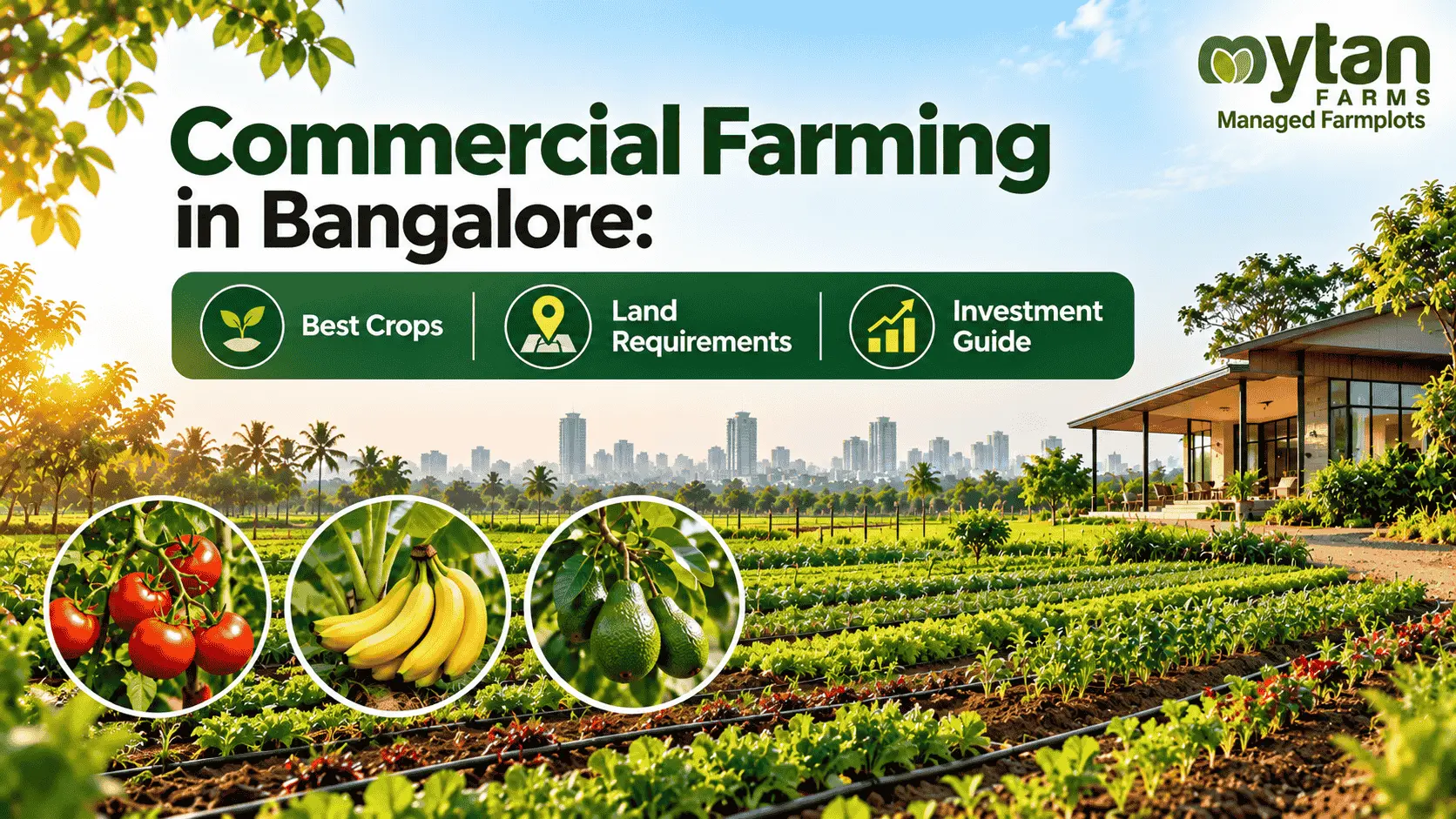
Starting a farm near Bangalore can be an exciting idea, especially if you want to put agricultural land to productive use rather than just leave it unused. But commercial farming involves much more than buying land and planting a few trees. You need to choose crops that suit the local climate, arrange a dependable water supply, find workers and most importantly know who will buy your produce. If you are considering commercial farming in Bangalore the first step is to understand what you want from the farm. Do you want regular income from vegetables or a long term orchard?
Understanding commercial farming near bangalore
Commercial farming means growing crops or producing agricultural goods for sale. Unlike a kitchen garden or a small personal garden, a commercial farm needs a clear plan for production and expenses. The region around Bangalore has access to urban markets, restaurants, retailers and produce distributors. This creates opportunities for farmers but it also means dealing with competition, changing prices and also buyers who expect consistent quality. It is important for you to separate farming income from land appreciation. A plot might increase in value over time, but that does not mean the crops grown on it will generate a profit. Farming has its own operating costs and a poor harvest or sudden drop in market prices can affect your earnings. Before purchasing any land, decide whether you want to manage the farm yourself or hire a farm supervisor.
Which farming model should you choose?
There is no single farming model that works for every landowner. Your decision should depend on your budget, the amount of time you can give the farm and how soon you need the farm to start generating sales.
Vegetable farming
Consider this if you want a relatively short crop cycle. Leafy vegetables, tomatoes and other seasonal crops might be harvested sooner than fruit trees. But they require regular attention and pest management.
Fruit Orchard
They are better suited to you if you can wait for trees to mature. Mango and guava are 2 crops worth cultivating in the Bangalore region.
Agroforestry
It combines trees with agricultural production where the species and layout are suitable. It might offer different income opportunities over time but timber revenue can take years and depend on the growth.
Mixed cropping
It involves multiple crops on the same farm either together or in different sections. For example you can establish fruit trees while growing suitable vegetables in available spaces during the early years.
Best crops to evaluate for commercial farming in Bangalore
The best crops for your farm will depend on precise location, soil assessment and water supply.
Leafy vegetables
Leafy vegetables like spinach and coriander can be considered where irrigation and soil conditions and local demand are suitable. They generally have shorter growing cycles as compared to fruit crops which allow you to plan several harvests when conditions permit. The challenge is that leafy produce is perishable.
Tomato
Households, restaurants and food businesses making them a crop worth evaluating near Bangalore ‘s markets widely use tomatoes. But tomato prices can fluctuate sharply when supply changes. The crop also requires careful water management and pest and disease control.
Marigold
Marigold can be worth considering if you are planning farms supplying flower markets or florists and temples. Demand might increase around festivals on special occasions but prices and sales volumes can vary. Check the timing of the local market and the availability of planting material and distance to your intended market.
Mango
Mango is worth considering for a long term orchard. The right variety depends on the local growing conditions, market preferences or the quality of planting material available. Unlike vegetables, mango trees take time to establish before producing a meaningful commercial harvest.
Guava
Guava is another fruit crop to assess for commercial cultivation. Its suitability depends on the soil drainage irrigation and the variety selected. Before planting research the demand for fresh guava among retailers and other potential buyers.
Timber trees
Timber trees especially appeal to land owners interested in long term agroforestry. But the right species must be selected according to the site available water and conditions intended for harvesting.. You cannot treat timber as a quick income. Trees might require years of maintenance before they are ready for harvest and sale or felling might be subject to applicable legal requirements also.
Water, infrastructure requirements
How much land do you need for commercial farming? There is no fixed answer. A small intensively managed vegetable farm has different requirements from a fruit orchard or timber plantation. Your target production available budget, and intended sale channel should also determine the size
Soil quality
Getting a soil test before deciding which plots to grow the results can help you understand soil pH and nutrient level.
Water supply
You need to confirm that the farm has a dependable and legally usable water source. Do not assume borewell will provide sufficient water throughout the year. Check seasonal availability and local groundwater conditions.
Irrigation
Drip irrigation might help deliver water effectively to suitable crops especially orchards and some vegetable systems
Fencing and access
Fencing can help you manage livestock intrusion and defined boundaries. A user’s access road is equally important for bringing in supplies and transporting harvested produce.
Storage and transport
Vegetables and fruits might need shaded handling areas and quick transportation. Depending on the crop and scale additional storage or grading facilities might be important.
Labor and equipment
Estimate the people and equipment needed for planting, weeding and spraying where appropriate and harvesting.
How much does commercial farming cost?
The investment required for commercial farming in Bangalore varies widely. Land prices, plot size, water infrastructure and labor needs can make 2 farms in the same area very different in cost. Once you have estimated these costs, calculate the farm’s likely revenue using realistic yield and selling price assumptions. Then you can subtract the full operating expenses to estimate net operating profit. For example a farm that sells a large quantity of vegetables might generate substantial revenue but still make a small profit of Labor or crop protection costs are high. It’s very important for you to plan for months when there is a little or no income. Build conservative expected and optimistic scenarios into your calculations. This gives you a clearer picture of the financial risks before committing your savings.
| Cost category | What to include |
| Land acquisition or lease | Purchase price or lease payments, registration and applicable charges |
| Land preparation | Clearing, levelling where needed and soil preparation |
| Planting | Seeds, saplings, nursery material and planting labour |
| Irrigation | Water storage, pumps, pipes, drip systems and maintenance |
| Farm infrastructure | Fencing, tools, equipment and suitable storage facilities |
| Operating expenses | Labour, fertilisers, crop protection and routine upkeep |
| Harvest and transport | Picking, sorting, packaging, loading and delivery |
| Contingency | Unexpected repairs, crop losses and changes in input prices |
How does Mytan Farms approach managed farming?
If you want to own agricultural land but cannot spend every day supervising farm operations, managed farmland is another option to consider. Mytan Farms presents a 3-layer farming model involving timber trees, fruit trees, and vegetables, along with farm management and water conservation. The idea is to combine crops with different growing timelines rather than just depending on a single crop category. However, the actual crop mix planting plan and management services need to be confirmed for the specific project that you are considering. A general description does not establish which crops will be grown on your plot or when they might generate income. Before choosing Mytan Amruta, Mytan Lepakshi or another relevant project, request details of the exact location and irrigation facilities. Ask who manages planting labour crop maintenance and harvesting besides whether sales are also included in the service. Managed agricultural land can reduce your daily workload, but it does not remove farming risks or guarantee of financial return.
Start with a clear farming plan
Commercial farming near Bangalore can be worth exploring when the crop land and market fit together. Before investing, speak with local farmers and research the buyers you intend to supply. Compare the full cost of purchasing or leasing land with the cost of establishing and operating the farm. If you are considering managed farmland, review the legal documents and management agreement independently.
Faqs
Which crops are suitable for commercial farming near Bangalore?
Leafy vegetables, tomatoes , marigold mango guava and drumstick are among the crops worth evaluating. That suitably depends on soil, irrigation, and climate.
How much is needed to start commercial farming?
The required area depends on your crop production target budget and sales model. First calculate your expected production costs and market demand before deciding how much land to acquire.
What are the major expenses of establishing a commercial farm?
Major expenses are land purchase or lease, soil preparation seeds or saplings, fencing, labour harvesting and transport. You should also set aside some money for repairs and crop losses.
How important is irrigation for farming near Bangalore?
Irrigation can be vital, especially in dry spells and for crops requiring constant moisture. Select crops based on the availability of water during the year, irrigation requirements and any other applicable groundwater restrictions.
Can managed farmland projects be cultivated commercially?
A managed farmland project may organize crop planning, irrigation, and labour depending on the agreement. But services vary from project to project. You’ll want to actually read the crop plan management responsibilities and recurring fees to see if the arrangement is right for your commercial farming goals.