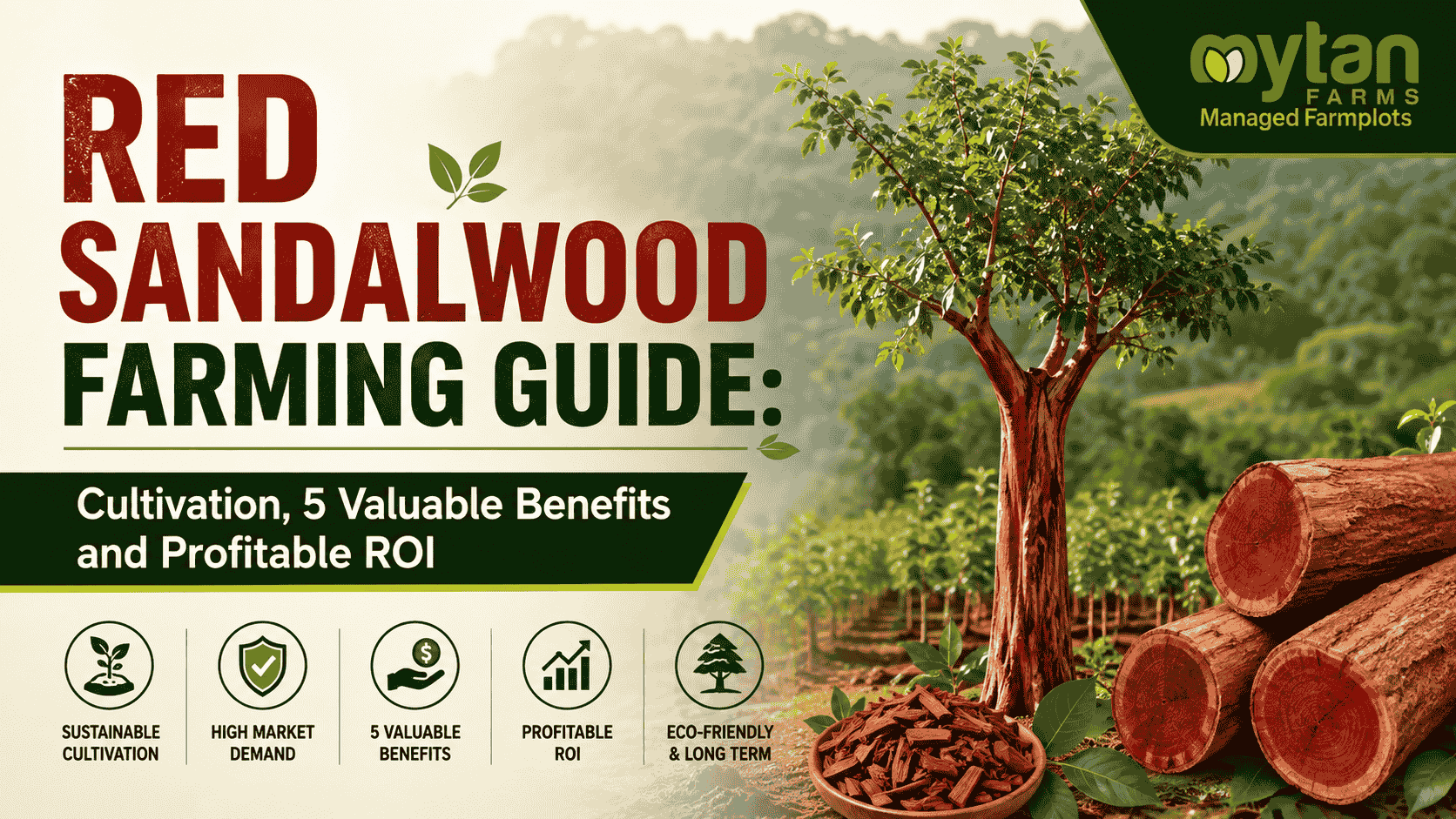
Buying sandalwood farmland is exactly like planting a tree that ultimately develops into a gold mine. It needs a lot of patience, care, and focused effort at first, but with an appropriate strategy, it can turn into an extremely valuable investment that keeps giving for many years.
Sandalwood is valued for more than just its scent. Besides that, it is a rare and highly prized resource that is often used in cosmetics, perfumes, and other traditional medicines all over the world. Because of its limited supply and increased demand, sandalwood farmland is one of the few investments that truly combines sustainability and long-term wealth creation.
But planting trees isn’t the only way to succeed. It is essential to have a thorough understanding of state-specific laws, permits, maintenance expenses, reasonable return on investment schedules, and some risk factors. To help you make wise, secure, and profitable decisions regarding sandalwood farmland investment, we’ll cover each of these topics in this guide, from laws and investment models to potential returns and hazards.
What Makes Sandalwood Farmland a Unique Investment?

- Higher Returns Than Regular Crops
Sandalwood cultivation actually generates long-term profits per acre, surpassing typical farmland crops, and makes investment in sandalwood farmland highly lucrative. - Strong Domestic and Global Demand
Indian sandalwood is being used for perfumes, cosmetics, and several medicines and this creates a consistent demand for it and investment opportunities.
Strong Domestic and Global Demand
Indian sandalwood is being used for perfumes, cosmetics, and several medicines and this creates a consistent demand for it and investment opportunities. - Predictable Long-Term ROI
Sandalwood trees generally get mature in 12-15 years to mature and produce heartwood and oil, offering steady returns for those who invest in sandalwood farmland. - Sustainable and Environmentally Friendly
Furthermore, sandalwood farming supports biodiversity, improves soil health, and gives green investment value, combining profits with environmental responsibility. - Managed Farmland Simplifies Investment
When investors actually opt for professional management support, then this approach allows them to handle planting, irrigation, security, and harvesting processes while reducing risk factors in sandalwood cultivation and farmland projects. - Scarcity Secures Value
As we all know, there are strict regulations and limited availability of sandalwood. This actually makes this tree rare and a high-demand asset for long-term investors.
Regulatory Framework for Sandalwood Farming in India

- Evolution of Sandalwood Laws
Historically, sandalwood cultivation was actually government-controlled due to scarcity, but policy reforms now allow private investment in sandalwood farmland under strict regulations.
- Government Policies Supporting Private Cultivation
National and state-level schemes allow private investors to plant, maintain, and harvest sandalwood trees, and encourage the growth of sustainable farming.
- Karnataka Regulations
When it comes to Karnataka, the state allows liberalized sandalwood farming; investors secure permits from the Forest Department, ensure legal compliance, and secure ownership.
- Tamil Nadu Regulations
If we talk about the regulations of Tamil Nadu, plantation registration and marking permissions are mandatory for investors, providing a legal framework for sandalwood cultivation and protection of tree rights.
- Maharashtra & Andhra Pradesh Regulations
In Maharashtra and Andhra Pradesh, ownership rights are clarified for private cultivators, and this allows legal investment in sandalwood farmland and adheres to state-specific rules.
- Documentation and Traceability
Maintaining farm records, legal documents, and harvest traceability ensures compliance, transparency, and smooth operations for investors in sandalwood farming.
Investment Models: Choosing What Fits You
- 1. Direct Plantation Model
In this model, investors actually purchase farmland and directly manage sandalwood cultivation. This provides full control and maximum profit but it needs long-term commitment and strict legal compliance.
- 2. Managed Farmland Model
In this setup, professional companies oversee the plantation, irrigation, and harvest. Perfect for passive investors who are looking for exposure to sandalwood farming without even operational challenges.
- 3. Hybrid or Cooperative Model
It actually blends the benefits of ownership and shared management. Here, investors jointly fund and monitor sandalwood farmland projects, and balance the control with reduced workload.
Risks & Challenges Investors Often Overlook
- 1. Tree Theft and Illegal Harvesting
Sandalwood’s high market value attracts theft. Investors should ensure round-the-clock security and proper plantation fencing.
- 2. Market Volatility and Policy Changes
You should know that prices of sandalwood oil and heartwood often fluctuate based on global demand and export policies, and they directly influence long-term returns from sandalwood cultivation.
- 3. Natural and Environmental Risks
Drought, pests, and poor soil conditions can even affect tree growth and yield. So, choosing suitable regions and expert agronomy really reduces these risks.
- 4. Dependence on Management Companies
Several investors heavily depend on managed farmland operators. Lack of transparency or unrealistic ROI promises often lead to financial setbacks in sandalwood investments.
- 5. Mitigation Through Planning and Partnerships
Risk can be lessened if crop insurance is done, verified legal documentation, third-party audits, and trusted agro-partners with proven sandalwood farming experience.
Legal Precautions Before Investing in Sandalwood Farmland
Before investing in sandalwood farmland, it’s crucial to ensure complete legal compliance. Many investors skip due diligence and face disputes or losses later. Here’s what you must verify:
1. Land Title & Ownership
Always confirm that the land has a clear title and is completely free from disputes or encumbrances. Verify the Encumbrance Certificate and ownership documents in order to ensure full transfer rights.
2. Land Conversion & Zoning
Check if the land is legally eligible for sandalwood cultivation under state laws. Agricultural, non-agricultural status must align with plantation activity in order to avoid legal complications.
3. Forest Department Registration
As sandalwood is a protected species, forest department registration is mandatory. So, ensure that valid permits for plantation, harvest, and transport are obtained under Indian Forest and Wildlife Protection laws.
4. Managed Farmland Verification
If investing through a managed farmland scheme, then review a company’s credentials, GST registration, and project licenses. Always ask for a written agreement detailing land ownership, profit-sharing, and maintenance rights.
5. Red Flags to Avoid
Always be cautious of companies that offer unrealistic ROI, missing permits, or even unclear contracts. Lack of transparency is a major warning sign in sandalwood investment projects.
Conclusion
Investing in sandalwood farmland is truly more than just a financial move. Beyond that, it’s a commitment to patience, sustainability, and long-term growth. When done through proper legal compliance, expert supervision, and ethical practices, sandalwood cultivars can really deliver exceptional returns and nurture the environment.
Actually, every well-planned acre becomes a lasting asset that continues to grow in value over time. If you’re ready to explore a secure and sustainable wealth opportunity, Mytan Farms offers trusted, professionally managed sandalwood farmland projects built for lasting prosperity.