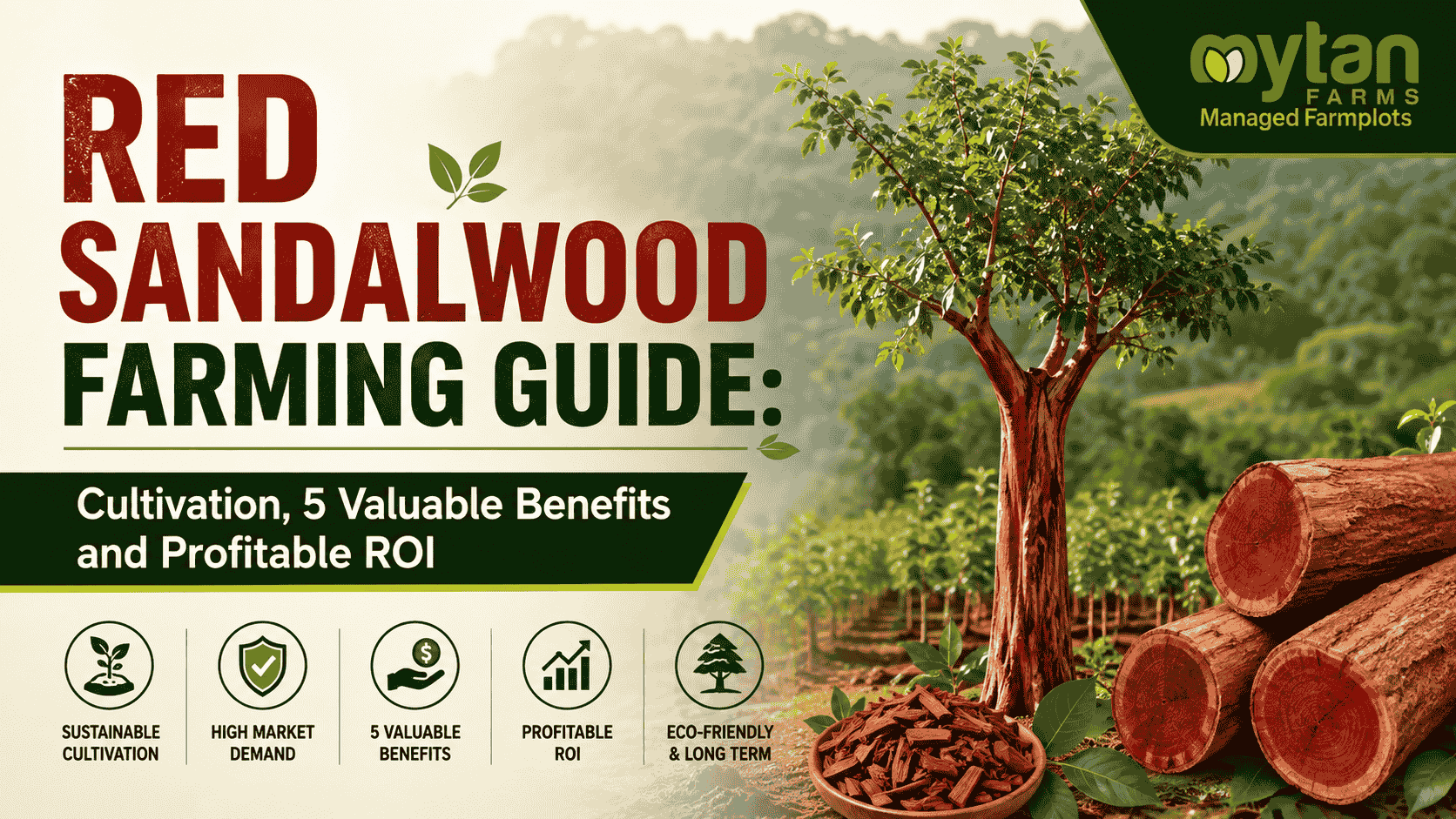
Sandalwood has earned the nickname “green gold” for a reason. Its wood and oil are incredibly valuable, used in perfumes, medicines, cosmetics, and religious rituals. The demand spans across continents, countries like Australia, China, and Japan import tons of it every year. Because of this consistent global demand and limited supply, the prices stay high, giving investors a strong reason to consider sandalwood farmland as a long-term asset.
Beyond profits, sandalwood cultivation helps the environment by improving green cover. Bangalore’s soil and climate make it one of the most suitable regions in India for growing sandalwood, and the potential returns here are impressive.
Understanding Sandalwood: Varieties, Growth Cycle, and Value
India produces several types of sandalwood, each with its own value and purpose. The table below shows the key varieties:
| Variety | Characteristics | Uses |
| Indian Sandalwood | Known for its rich fragrance and high oil content, making it a more valuable type. | Perfume, skin care products |
| Australian Sandalwood | Low oil quality. | Oil |
| Red Sandalwood | Valued for timber and medicinal properties. | Cosmetics, timber, medicine, wood |
Sandalwood trees take time, usually around 12 to 15 years to mature and produce heartwood rich in essential oil. The longer the tree grows, the higher the yield and quality of oil. Mature trees can be worth several lakhs each, depending on size and oil content.
Managed sandalwood farms are becoming popular because they remove the stress of hands-on management. Investors purchase a plot, and the company looks after planting, care, and harvesting. It’s a secure and passive way to earn from nature’s most valuable tree.
The Sandalwood Market: Demand, Pricing, and Export Potential
Sandalwood has a thriving market worldwide. It’s used in:
- Fragrances and essential oils
- Skincare and cosmetic products
- Medicine and aromatherapy
- Fine timber for carving and furniture
Because of these multiple uses, sandalwood enjoys stable global demand. Indian sandalwood, especially from Karnataka, commands premium prices, between ₹8,000 and ₹12,000 per kilogram for wood and up to ₹1.75 lakh per kilogram for oil.
The government’s recent policies have made private sandalwood farming easier, further boosting investor confidence. Given the scarcity of natural sandalwood and its consistent demand, this sector promises solid and long-term returns.
Why Bangalore Region is Ideal for Sandalwood Cultivation?
Bangalore’s geography and weather are perfectly suited for sandalwood.
- Climate: Annual rainfall between 600 and 1100 mm supports healthy tree growth.
- Soil: The red loamy soil of Karnataka, rich in iron and moisture, encourages strong root systems and higher oil yield.
- Temperature: Mild and stable throughout the year, which reduces stress on plants.
The Karnataka government has opened doors for private sandalwood cultivation, making it easier for investors to participate. Proximity to major markets and export hubs gives Bangalore another edge, allowing smooth transport and sale.
Investment Models: DIY vs Managed Sandalwood Farmland
There are two main investment routes:
DIY (Do-It-Yourself): The investor manages everything, planting, irrigation, pest control, and marketing. This model suits those with agricultural experience but demands time and attention.
Managed Farmland: Here, a professional company takes care of everything. The investor simply owns the land while experts handle cultivation, maintenance, and harvesting. They even manage legal approvals and sales. For busy investors or first-timers, this is a far more practical option with steady returns.
6Legal Framework and Government Regulations
Because of its value, sandalwood was once strictly controlled by the government. Today, private farming is allowed, but certain rules remain to ensure legal trade.
- Tree cutting requires permission from the forest department.
- Transporting wood needs an official permit.
- Sales must go through registered buyers or auctions.
These measures protect both farmers and investors. Managed farms generally handle all documentation and compliance, reducing any legal hassle for landowners.˛
Initial Investment Costs and Breakdown
Starting sandalwood farming requires an upfront investment. Costs include:
- Land purchase: Price varies based on location and soil fertility.
- Infrastructure: Fencing, soil leveling, irrigation setup.
- Plantation: Good seedlings, companion plants, and fertilizers.
- Maintenance: Labor, pest management, and periodic care.
In the managed farmland model, these costs are pooled into one-time investment packages, which makes it more economical than handling each part separately.
Revenue Projections and ROI Timeline (15–20 Years)
Sandalwood trees are slow but sure earners. Returns begin only after several years but grow significantly over time.
Timeline for Returns:
- Years 1–7: Minimal income; trees are still growing.
- Years 7–15: Heartwood formation begins; moderate returns possible.
- Years 15–20: Maturity phase; maximum yield and high profits.
The longer you hold, the more valuable your trees become. Bangalore’s location near export routes adds even more value to the final harvest.
Best Locations Near Bangalore for Sandalwood Farming
Several areas around Bangalore are ideal for sandalwood cultivation:
- Ramanagara: Excellent rainfall, perfect for managed farms.
- Chikkaballapur: Fertile soil and easy access to urban markets.
- Tumkur: Semi-cool climate suitable for sandalwood growth.
- Mandya: Rich loamy soil and strong farming infrastructure.
- Hassan & Mysore Belt: Traditional farming knowledge and strong yields.
These regions combine favorable weather, good soil, and strong connectivity, essential for profitable sandalwood farming.
Cultivation Process: From Plantation to Harvest
The process begins with quality seedlings, usually 6 to 12 months old, raised in nurseries. Sandalwood is a semi-parasitic tree, so it needs host plants like Pisonia, Sesbania, or Casuarina for nutrients.
Steps include:
- Digging deep pits and mixing topsoil with organic manure.
- Planting seedlings with proper spacing.
- Regular irrigation during the first two years.
- Periodic fertilizer and pest control applications.
- Weed removal every few months.
After 8 to 10 years, heartwood formation starts. The best harvest time is around 15 years, when oil content is at its highest. Harvesting must be approved by authorities before selling the produce.
Risk Factors: Pests, Theft, and Market Fluctuations
Sandalwood’s value brings certain risks.
- Diseases: The “spike disease,” caused by phytoplasma, can damage trees. Using healthy seedlings and pest control prevents this.
- Theft: Because of its high price, sandalwood is often stolen. Farms should have fencing, guards, CCTV, and GPS tracking of harvested logs.
- Market Changes: Prices may fluctuate slightly, but global demand keeps them stable overall. Growing multiple varieties also balances risk.
Tax Benefits and Exemptions for Sandalwood Farmers
To encourage plantation, the government provides tax benefits for sandalwood farming. Agricultural land used for this purpose often qualifies for partial or full tax exemption. Investors also gain faster access to harvesting certificates and other approvals.
This makes sandalwood farmland a low-risk, high-reward investment compared to many other agricultural options.
Exit Strategies and Selling Your Sandalwood Harvest
Once the trees mature, investors can harvest and sell them legally after getting the required certificates. The sale happens through government-approved auctions or authorized buyers.
Mature trees yield premium prices, especially for export markets. After 15 years, both wood and oil can fetch exceptional profits, giving investors double or triple their original investment value.
Success Stories: Real Investor Experiences
Akash Sharma, an IT professional, decided to diversify his income and invested in managed sandalwood farmland. He didn’t have to supervise the operations, yet his trees grew well under expert care. Within 10 years, his land value increased, and he started earning from other crops grown alongside sandalwood.
Another investor, Rajeev Mohra, was inspired by Akash’s results. He too bought a small managed plot, and within a few years, his investment started showing strong appreciation. Both investors agree that sandalwood farming gave them stability and long-term security that typical market investments rarely offer.
Conclusion
Sandalwood farming is a long-term investment, but one that’s rooted in real value. The demand for its wood and oil will never fade, making it a stable, eco-friendly option for those looking to grow wealth responsibly.
For anyone who wants a secure and managed approach, Mytan Farms offers ready-to-invest sandalwood farmlands near Bangalore. With their professional cultivation, government compliance, and dedicated care, investors can relax while their “green gold” quietly grows into a lifetime asset.