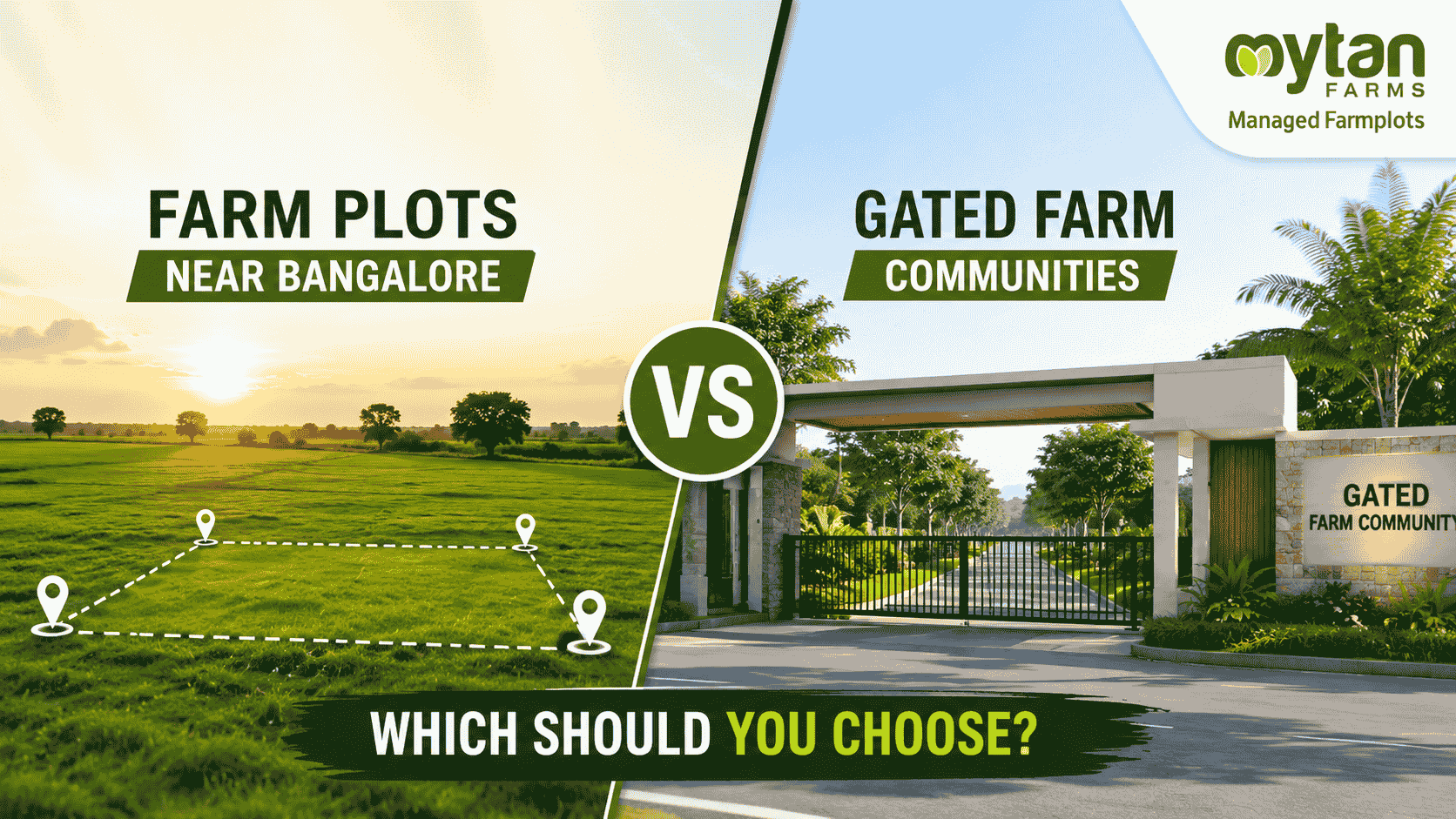
Purchasing farmland in Bangalore is like planting a tree in that it takes time before it bears fruits, yet with adequate care and knowledge, it can become something so worthwhile. Nowadays, many urban investors are looking outside urban areas to invest in serene green spaces that offer both economic and emotional rewards. But, without the correct direction, the process may become very difficult.
We will make it easy in this blog to make your investment in the growing market in farmland in Bangalore, informative, safe and rewarding, in terms of farmland laws, loans, location, and professional advice.
Understanding What Counts as Farmland in Bangalore
Before buying farmland in Bangalore, you need to know what Karnataka laws regard as farmland. In legal terms, agricultural land refers to land that is used exclusively in agricultural activities, including cultivating, horticulture, or dairy farming. It must be officially converted to be used in residential or commercial construction.
The agricultural land of Bangalore has strict state legislation that guards against green areas and urban development. Whereas, converted land refers to agricultural land which has undergone legal conversion into non-agricultural use via DC conversion. This mixed use typology typically entails farmhouse plots near Bangalore, that offer the appeal of rural living but permit some development of residential or recreational amenities.
Legal Framework You Must Know Before Buying Farmland

In order to ensure a secure and legitimate investment, purchasing farmland in Bangalore necessitates an understanding of ownership rights, legal regulations, along with requirements for eligibility.
- The Land Reforms Act of Karnataka
The legal ownership of farmlands in Bangalore is provided under Karnataka land reforms act. With the new regulations, individuals whose non- agricultural income is less are allowed to own farmlands, unlike before when only registered farmers would have the opportunity. Non-farmers and NRIs are required to meet some requirements before registering under this Act before investing in agricultural land in Bangalore.
- Rules for Conversion (Agricultural to Non-Agricultural)
Should you intend to utilize farmland for either residential or commercial uses, DC Conversion is required. Through this formal procedure, the land’s classification is changed from agricultural to non-agricultural. In order to be sure the conversion is legally valid and documented, always confirm approval through the revenue department.
- Checklist for Documents Before Buying
Check all ownership and legal documents before completing your farmland purchase. The title deed, encumbrance certificate, mutation extract, and RTC (Record of Rights, Tenancy, and Crops) are important documents. These documents prove that Bangalore’s farmland is legally clear, verify ownership, and avoid disputes.
- Typical Legal Errors to Steer Clear of
Many buyers fail to comply with important precautions, which might result in legal issues later. stay clear of these typical mistakes:
- Buying a property that is the subject of ongoing legal proceedings or disputes
- Ignoring appropriate revenue and conversion approvals
- exceeding the Reforms Act’s land ceiling limits
- Ignoring encumbrance or mutation record verification
- Relying on verbal promises without proper documentation.
Financing Options: How to Get a Loan for Farmland in Bangalore
Applying for a farmland loan in Bangalore is somewhat more difficult than applying for a typical home loan. In urban areas, home loans are usually secured by fixed assets, where as farmland loans are based on agricultural income, land type, as well as adherence to state farming regulations. For sincere buyers, there are still many kinds of reliable financing options.
Popular Financing Sources:
- Nationalized Banks: Institutions that provide agricultural financial services for the purchase and development of farmland include SBI, Canara Bank, and Indian Bank.
- Small and medium-sized farmers looking for flexible repayment plans and reduced interest rates could think about cooperative banks.
- Non-Banking Financial Companies, or NBFCs, are the most suitable option for purchasers looking for specialized financing options for farm investments that require less processing.
Government and Institutional Support:
- Assistance from NABARD: Offers low-interest loans and subsidies for projects involving the development of agricultural land.
- PM Farmers are able to get short-term funding for equipment and cultivation with the Kisan Credit Card.
- State Agriculture Department: Provides financial assistance as well as special grants for organic and sustainable farming projects.
Best Locations to Buy Farmland Near Bangalore
When buying farmland in Bangalore, location is all that matters. In order to maximize returns, factors such as future appreciation, development potential, soil fertility, as well as connectivity are essential. The following are a few of the most promising fields:
- Road Kanakapura
A green area with fertile soil, Kanakapura Road is perfect for horticultural and organic farms. Buyers who are seeking the best farmland close to Bangalore are increasingly opting for this area.
- Doddaballapur
Doddaballapur, which is north of Bangalore, has affordable farm plots for sale. It is great for serious investors because of its large plot availability and long-term growth potential.
- Devanahalli
Strong infrastructure development has taken place in Devanahalli, which is close to the international airport. That region is among the best places to buy farmland in Bangalore simply because it offers high rates of appreciation.
- Belt of Hosur and Denkanikottai
Hosur and Denkanikottai, on the Karnataka-Tamil Nadu border, provide affordable farmland options. For farm plots located near Bangalore, these regions offer high soil quality along with potential for cross-border investment.
- The Attibele–Sarjapur Stretch
This area actually combines natural beauty with easy travel to Bangalore city. It is an excellent choice for those looking for the best farmland close to Bangalore, and it is excellent for weekend farmhouses as well as agricultural investments.
Factors to Consider Before Buying Farmland in Bangalore
Before even finalizing, always evaluate the land’s quality, legal status, and accessibility in order to avoid mistakes. Here are some of the key factors that needs to be considered:
Water Availability and Soil Type
We all know, water is the most crucial factor for farmland. So, always check for borewell access, sources for irrigation, or you can also check for nearby lakes. Furthermore, red loamy and black soils around Bangalore are great for agriculture, fruit plantations, and organic farming. Always get a soil test done in order to confirm fertility.
Access Roads and Infrastructure
The second factor to consider is access roads and infrastructure. Ensure the farmland has proper road access for transport and daily use. Well-connected plots with power supply, fencing, along with nearby markets hold higher long-term value.
Zoning and Green-Belt Restrictions
Zoning and Green-Belt Restrictions are other factors that are truly important. Confirm the land falls under a legal agriculture zone. Green-belt areas can’t be used for non-farming purposes, so understanding zoning laws always protects your farmland in Bangalore from future disputes.
Connectivity to Bangalore City
Always choose a location within 40-70 km of the city for the right balance between peace and accessibility. Actually, areas with good highway links, like Kanakpura, or Doddaballapur, provide higher growth potential.
Title Verification and Registration Charges
Verify all ownership documents, RTC, title deed, mutation extract, and encumbrance certificate. Moreover, factor in stamp duty and registration fees whenever planning your overall investment.
Conclusion
When you own farmland in Bangalore, it offers a great combination of peace, growth, as well as long-term value. As the city is expanding day-by-day, nearby agricultural land in Bangalore is being a sought-after assets for both investors and nature lovers.
You just have to make sure to verify the legal details, understand the zoning laws, choose a location with good water and road access. When you choose wisely, farmland can even give you steady appreciation, natural beauty along with a secure investment for the years ahead.