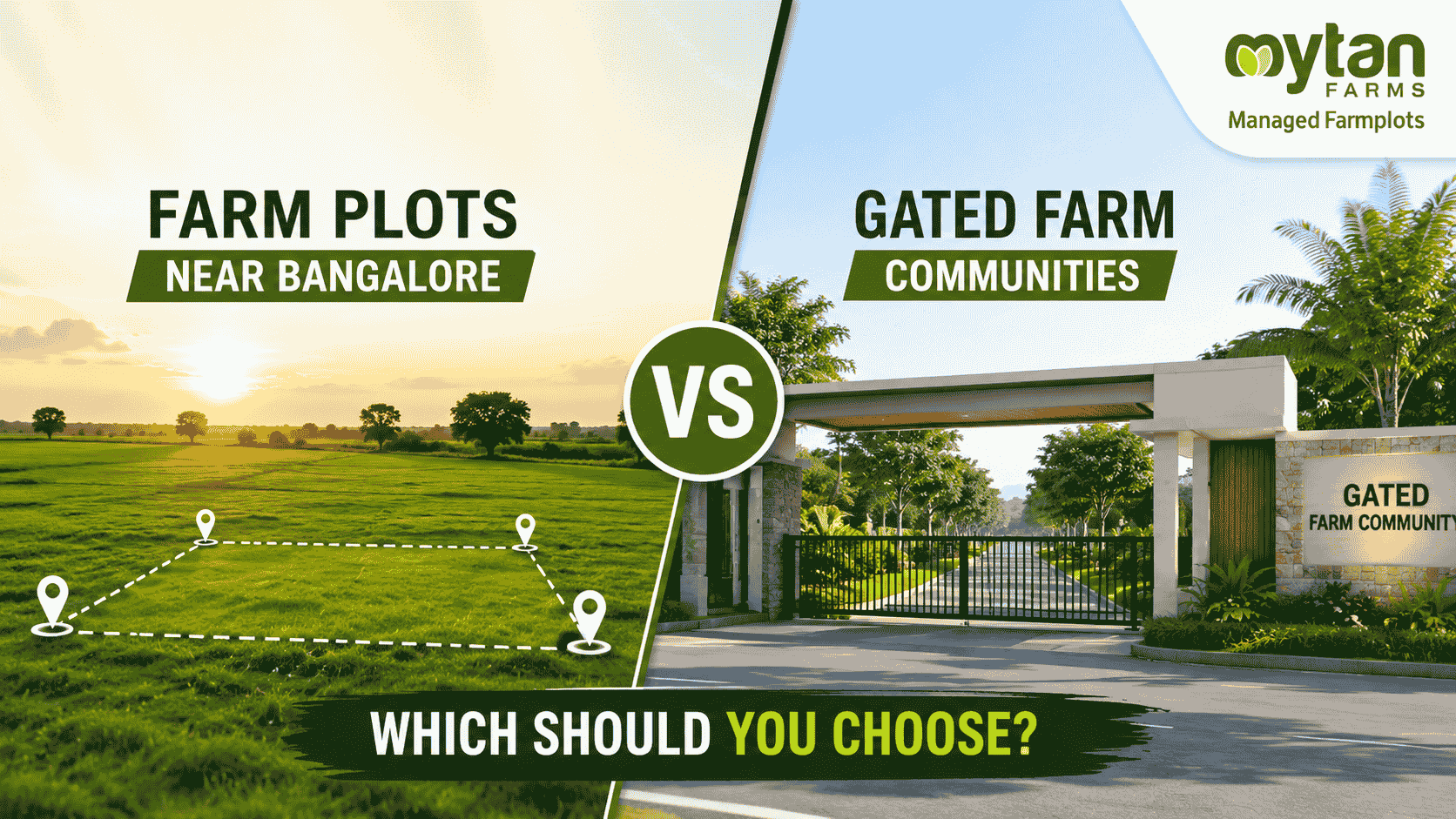
You are not the only person who has ever wanted to start a farm but was unsure of where to start. Nowadays, many people are opting for Commercial farming near Bangalore, not only out of passion but also for financial gain.
Bangalore is rapidly evolving as a commercial farming hotspot. One major factor for this shift is its good climate, which allows for a wide range of crops to be grown there year-round.
Also, the demand for locally grown and organic food is rising because consumers prefer unprocessed fresh produce, dairy products, herbs and fruits. Small and mid-size farmers now have more options to expand their farming businesses because of this shift.
In this blog, we will talk about everything from selecting the appropriate land and crops to understanding the fundamentals of law and making money.
Understanding Commercial Farming
The primary goal of Commercial farming near Bangalore is to make money by selling crops. This is carried out on a larger scale with careful planning contrast to small family farming.
What distinguishes it from traditional farming?
The main focus is profit, and not just self-consumption. It makes better use of tools and technology and follows crop trends and market demand frequently.
What Makes the Area Near Bangalore Great?
- The favourable climate, because of which farming is possible.
- Rich soil type which allows many crops to grow.
- High demand in neighbouring cities for organic and local produce.
- Easy access to markets, buyers and transportation.
Farmland investment in Bangalore is popular because the city offers you a strong start if you want to make farming your business.
Choosing the Right Land
Check the quality of the soil.
- Fruits and veggies grow well in red loamy soil.
- Cotton and pulses grow well in black cotton soil.
Stay close to the market.
- You can sell more quickly and save money on transportation if you live close to Bangalore.
- Also, there are more customers in nearby large cities.
Legal Things to Keep in Mind
- In Karnataka, only farmers can purchase farmland.
- Check the land titles to ensure that they are intended for farming.
Infrastructure and water.
- Check that the property has a dependable water supply such as a canal or borewell.
- Strong roads, power, and fencing also have a significant impact.
Selecting Profitable Crops
Popular fruits and vegetables.
- Fruits: Pomegranate, guava, and mango.
- Vegetables: carrots, tomatoes and capsicum. These sell well in urban markets and are in high demand.
Try farming flowers as well.
- Jasmine, marigold and rose are common flowers used for decorations in temples, festivals and other places.
- Flowers require less space and offer quick returns.
Choose a Niche to Increase Revenue.
- Sandalwood can be a good source to generate revenue
- Also, there is a growing demand for medicinal herbs like ashwagandha and tulsi.
If you’re planning to grow crops naturally, organic farming in Bangalore is becoming a popular choice. It not only fetches better prices in city markets but also supports long-term soil health.
Investing in Modern & Sustainable Practices
- Organic farming in Bangalore
Avoid hazardous chemicals and use biofertilizers and natural compost. It keeps crops safe for both humans and the environment and helps in enhancing soil health.
- Consider polyhouse or greenhouse farming.
Covered structures like these protect crops from weather. With improved control, you can grow flowers and vegetables year-round.
- Conserve water and manage your soil.
Install rainwater harvesting devices to collect and use it for precipitation. To prevent pests and maintain a healthy soil, rotate your crops. Test your soil frequently and add organic matter to make it better.
If you’re exploring farmland investment in Bangalore, these sustainable practices and managed farm options can make your journey smoother and more rewarding.
Building the Right Team and Management Structure
- Choose your approach to managing the farm.
Self-managed farms require time and expertise, but they offer you complete control. Experts operate professionally managed farms while you invest and keep an eye on them.
- Make sure to check every day.
Farming needs active efforts. You and your team are required to conduct routine field visits, monitor fertiliser and water usage and assess plant health. Maintain records of costs, yields and crop cycles. Over time, it contributes to better outcomes.
- Outsource if necessary.
Nowadays, a lot of people invest in managed farmland communities. These services take care of everything while keeping you informed from planting to selling. Choose what best fits your goals, time and budget.
Marketing and Selling Your Produce
- Examine Various Selling Choices.
Sell directly to supermarkets, organic stores, flower shops and vegetable shops in your community. For direct customer contact, you can also try farmers markets.
This works especially well if you’re involved in organic farming in Bangalore, where people prefer fresh and chemical-free produce.
- Take care of the logistics.
Organise the transportation of your produce from the farm to the city. To maintain freshness, use hygienic packaging and expedite delivery.
- Farm-to-table trend.
Produce straight from the farm is now preferred by many eateries. You can create a small brand and even accept online orders from communities or apartments in the area.
Common Challenges and Smart Solutions
- Legal confusion
First-time investors in farming do not know much about the legalities, and that’s why it’s important to check their eligibility to purchase farmland.
Solution: Always make sure you are legally permitted to purchase land in Karnataka and that it is agricultural land.
- Water or poor soil.
Sometimes investors make decisions without conducting soil or water availability tests.
Solution: Before purchasing the land, have a basic soil and water test conducted.
- Selecting an incorrect crop.
Beginners often grow what they like instead of what sells. But the smart way is to grow crops that people in your area want to buy. You can find this out by doing a bit of market research.
Lack of experience is another big issue. Farming may look simple, but it needs daily care and proper planning.
The best solution is to start small or take help from experts or managed farm services.
- Low sales or waste.
Produce that is unsold or wasted can result from a lack of a clear selling strategy.
Solution: Try a variety of sales channels and build relationships with customers early on. The majority of issues can be prevented or resolved with the correct assistance and preparation.
Conclusion.
Commercial farming near Bangalore is a wise long-term investment rather than a trend. With good soil, more people wanting local fruits and vegetables, and growing interest in organic food, farming can be both a good way to earn money and live a calm life.
Take things one step at a time if you’re serious about starting. Learn the fundamentals, select suitable land, pick good crops and closely observe your development.
If you need help, don’t hesitate to talk to a professional. We at Mytan Farms offer managed farmland options, where everything is looked after for you. It’s a simple and guided way to invest.
You invest and they handle everything from soil to sales. At first, farming may seem overwhelming, but with the correct information and help, you can get off to a strong start and develop with assurance.
FAQ
- What are the legal requirements for buying agricultural land near Bangalore?
In Karnataka, only registered farmers or those with farming experience are permitted to purchase agricultural land. Additionally, you need to confirm that the land is legally suitable for farming, look up land titles and check the status of conversion.
- Which crops are most profitable for Commercial farming near Bangalore?
Mango, guava, and pomegranate fruits and vegetables, as well as tomatoes, carrots and capsicum, thrive. Profitable flowers include marigolds and roses. For the long term, sandalwood and medicinal herbs are excellent choices.
- What initial investments are required to start a commercial farm?
Money will be needed for labour, basic tools, seeds or plants, water setup, fencing and land. Based on location and farming type, starting small can cost anywhere from ₹5 to ₹10 lakhs.
- How do I market and sell farm produce in Bangalore?
You can sell to florists, supermarkets, organic stores and local vegetable shops. Other viable options include online platforms, housing societies and farm-to-table services. Efficient packaging and prompt delivery contribute to higher sales.
- Are the major mistakes to avoid when starting?
Steer clear of selecting the wrong crops, disregarding soil or water tests, purchasing land without legal checks and failing to plan your sale. When necessary, seek professional assistance rather than attempting to handle everything alone.