
What is Red Sandalwood Farming?
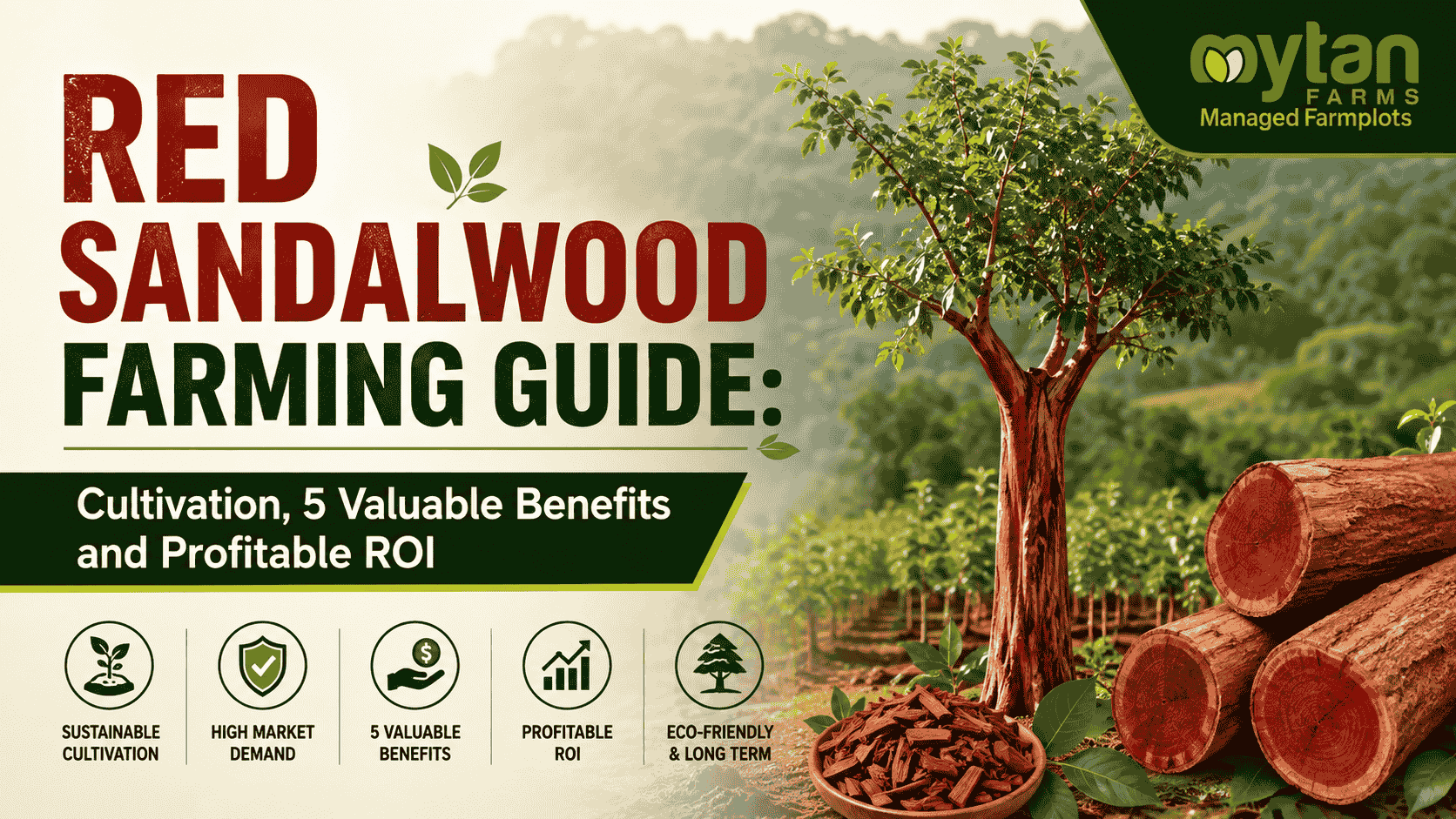
Red Sandalwood farming is the cultivation of this tree and selling it to the international market, such as China, Japan, and several Southeast Asian nations. The sandalwood has high demand for the following:
- Traditional medicine
- Luxury furniture
- Musical instruments
- Carvings, cosmetics
- Natural dyes.
Notably, this species is protected by the Food and Agriculture Organization (FAO) and India’s Ministry of Environment, Forest and Climate Change (MoEFCC), and they regulate its trade with certain regulations.
Many investors are now looking at red sandalwood cultivation as a long-term investment and searching for a reliable managed sandalwood farmland project near Bangalore.
This can be a truly fulfilling investment but you must know about the regulations, ROI, the right method and right sandalwood farmland near Bangalore.
The Right Climate, Soil & Requirements for Red Sandalwood Cultivation:
Before everything, you need to find the right location for red sandalwood cultivation. Here is what to check:
- Climate
Red sandalwood needs tropical and semi-arid climates to grow properly. It needs 20-30°C temperature, 700-1200 mm of annual rainfall, moderate humidity, and plenty of sunlight throughout the year.
- Soil Requirements
Here are the ideal red sandalwood soil requirement:
- Well-drained red loamy soil
- Sandy loam or gravelly soil
- Soil pH between 6.0 and 7.5
- Good drainage to prevent waterlogging
The tree works well even in a soil with poor nutrients because its deep root system absorbs minerals effectively.
- Best Regions in India
The natural regions for Sandalwood in India are Karnataka, Andhra Pradesh, Telangana, and Tamil Nadu.
Note: Areas near Bangalore provide all the right climate, soil conditions, and connectivity for this tree. This is one of the reasons why Sandalwood farmland near Bangalore is growing rapidly.
How to Start Red Sandalwood Farming? Step-by-Step Process:
Here is a step-by-step plan to start red sandalwood farming:
- Prepare the Land
Remove all the weeds and stones first. Then do a soil test before planting. Also, set a proper drainage system across the field.
- Select Healthy Saplings
Next, buy healthy saplings. Make sure you buy only from certified government or licensed nurseries. Healthy seedlings survive for long periods.
- Follow Proper Spacing
Maintain 10 ft × 10 ft or 3 m × 3 m spacing. This is an ideal condition where you can plant approximately 430–480 trees per acre.
- Plant During Monsoon
The planting season for Red Sandalwood Trees is June to September. The rainfall helps the sandalwood trees to spread their roots deeper.
- Irrigation
Red sandalwood trees need regular watering during the first two years. Mature trees may survive dry conditions with minimal maintenance but not prolonged droughts.
- Fertilization
Always apply organic manure during planting. But first, do a soil test and use a suitable NPK fertilizer. However, don’t use them in excessive amounts.
- Pest and Disease Management
Red sandalwood generally faces fewer pest issues. But you should do regular inspections and sanitation. This will keep your trees safe from fungal infections and termite attacks.
- Pruning and Maintenance
You must remove the damaged branches and weeds on time for growing a healthy trunk.
- Harvest Timeline
The heartwood may take 20-25 years for maturity. However, it also depends on climate, soil quality, and management as well.
5 Valuable Benefits of Red Sandalwood Farming:
- High Market Value
Red Sandalwood Farming has premium value in the market. The prices of red sandalwood vary across countries and depend on quality, age, legal auction prices, domestic regulations, and export demand.
- Strong Demand Across Industries
Red sandalwood is widely used in the following industries:
- Ayurvedic medicine
- Herbal supplements
- Cosmetics
- Religious artifacts
- Luxury handicrafts
- Musical instruments
- Decorative furniture
Since it has diverse applications, you will always enjoy high market demand.
- Low Maintenance After Establishment
Red sandalwood doesn’t need much care after a few years. You spend minimal costs for maintenance and still continue to enjoy the growth with routine monitoring.
- Environmental Benefits
Red Sandalwood also helps improve the environment. It helps in:
- Soil conservation
- Reduces erosion
- Biodiversity improvement
- Green cover expansion
Red Sandalwood cultivation can significantly improve soil health and the environment.
- Government Support
Several states now have forest and transit laws about red sandalwood cultivation. As investors, you should follow the local regulations regarding registration, harvesting, transportation, and sale of red sandalwood.
Red Sandalwood Farming ROI: Cost, Profit & Timeline:
The red sandalwood ROI heavily depends on factors such as
- Legal auction prices
- Wood grade
- Heartwood formation
- Domestic demand
- Export policies
- Government regulations.
So smart investors see it as a long-term investment for 20-25 years.
Notably, for the first few years, you would invest in land preparation, saplings, irrigation, fencing, labour, and maintenance.
Here are some of the top potential risks:
- Illegal trade restrictions
- Climate
- Disease
- Changes in Laws
- Delayed harvesting approvals
The best would be working with professional farmland management companies Mytan Farms to reduce the risks and ensure a flawless process.
Best Sandalwood Farmland Projects Near Bangalore:
More investors now look for a sandalwood farmland project near Bangalore. The region is suitable for farming, but it needs care. But with experienced plantation professionals and logistics, managing farmland becomes simple and efficient.
Professional farmland companies like Mytan Farms give you land ownership and manage the farmland on your behalf. They look after plantation, irrigation, security, maintenance, growth, and documentation.
However, always verify the following before you buy a sandalwood farmland near Bangalore:
- Clear land title
- Soil testing reports
- Water availability
- Plantation density
- Legal compliance
- Management experience
- Harvest planning
- Transparent maintenance charges
- Buyback policy (if offered)
What Legal Requirements Should You Must Check Before Investing?
If you are ready to start red sandalwood farming, make sure to follow the legal requirements first. There are special compliances under Karnataka Forest Act and Karnataka Forest Rules.
Investors must maintain clear ownership, plantation, and tree records from the beginning. Harvesting and transporting is allowed only after permission and documents are obtained from the Karnataka Forest Department.
Stop Reading About Farmland.
Come Walk On Yours.
Book a free guided visit to our managed farmland near Bangalore — we farm it, you own it.